Jumpsuits
Jumpsuits That Fit: How to Choose Rise, Leg Width and Fabric
A jumpsuit fits well when its rise sits at your natural waist, the legs fall straight from the hip, and the fabric has enough weight to drape without clinging. Check the rise first, because a wrong rise makes every other detail look wrong.
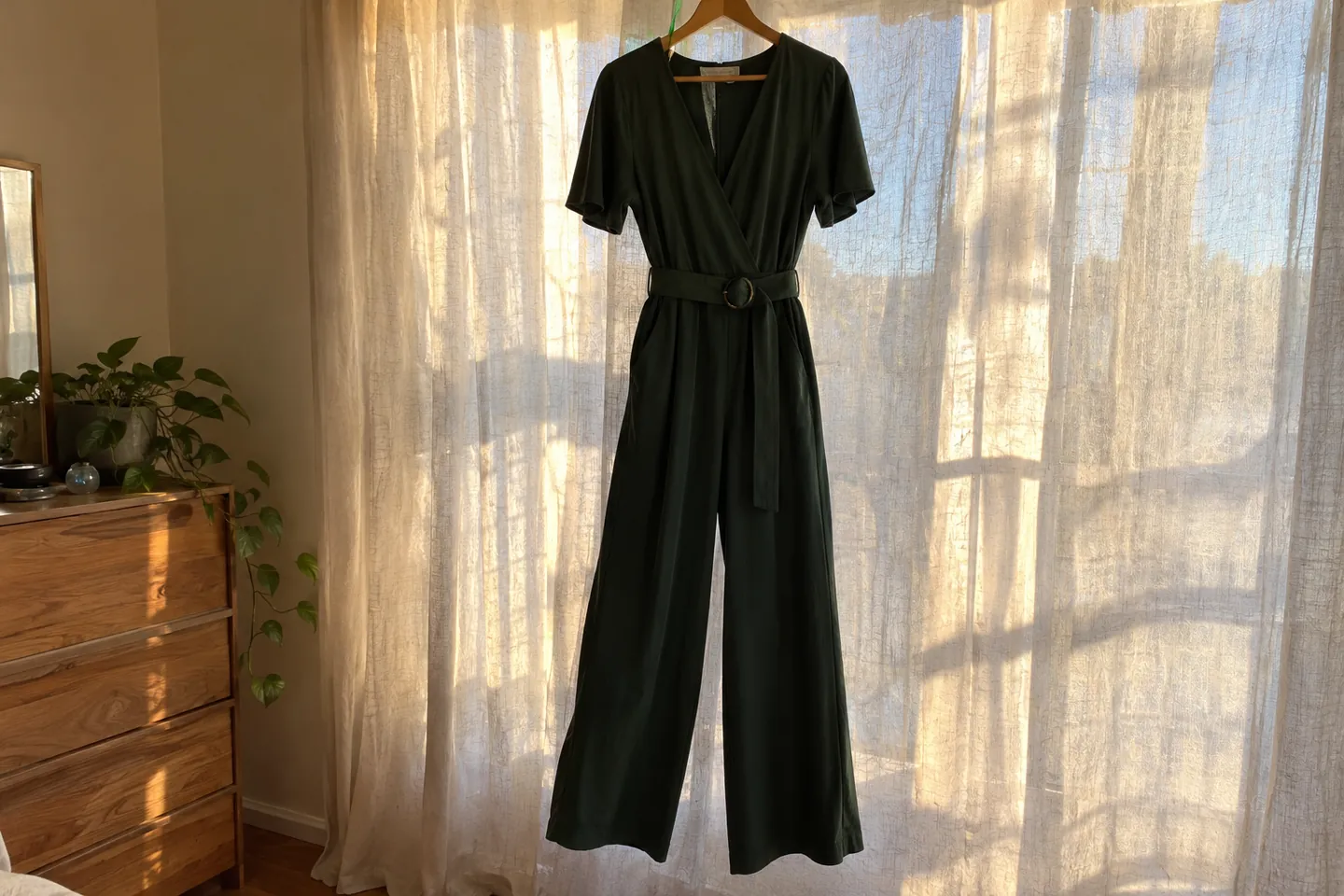
A jumpsuit is a single decision that has to be right in three places: where the top of the trouser sits, how the leg falls, and how the fabric moves when you walk. Most jumpsuits that disappoint are not the wrong colour or the wrong style. They have the wrong rise, so the proportions are off before anyone notices the details.
Start with the rise
The rise is the distance from the crotch seam to the waistband. On a jumpsuit, it decides where the waist sits, and so where the outfit looks balanced. A rise that is too low makes the body look shorter and the legs look heavy. A rise that is too high can feel tight under the bust and crease when you sit.
To check it, try the jumpsuit on and look at the seat in a mirror from the side. The waistband should sit at or just above your natural waist, the point where you bend sideways. If the waistband sits below that point, the jumpsuit will look as though it has slipped. A tie belt can adjust the visual waist, but it cannot fix a rise that is simply wrong for your body.
Check the crotch seam too. If the seam sits too tight against you when you sit, the rise is too short for your torso. If the fabric bags below the waist, the rise is too long. Neither is fixable without a tailor, so it is worth testing both by sitting down in the fitting room.
Choose the leg for your proportions
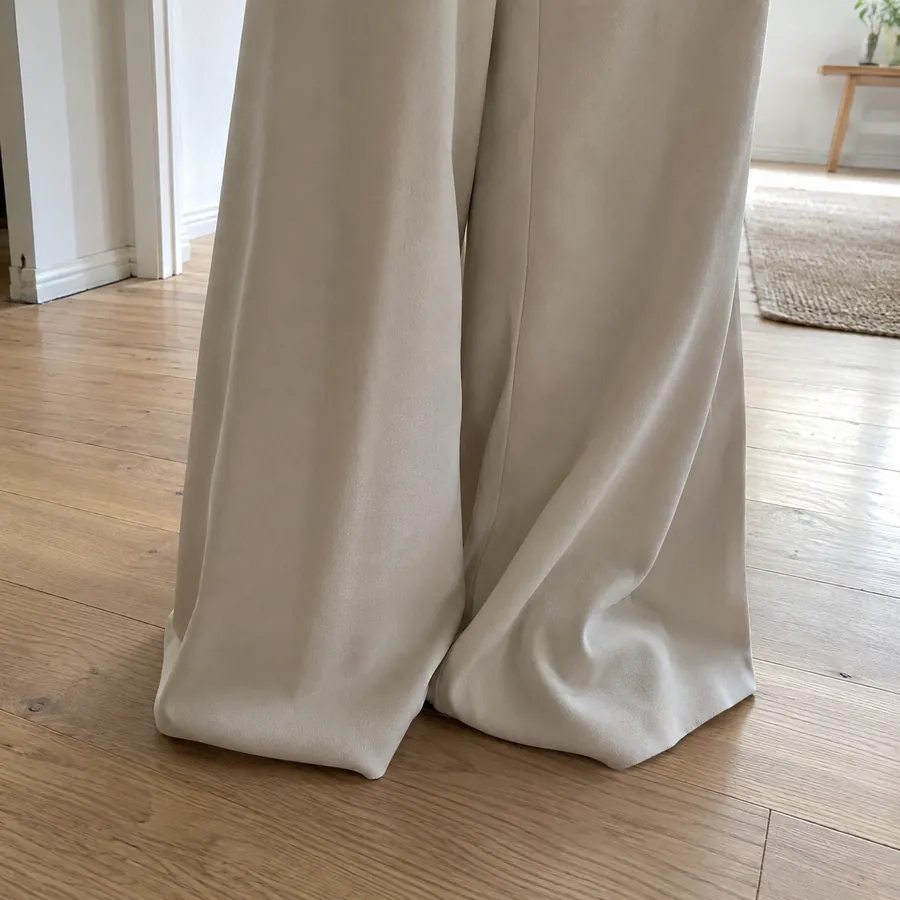
The leg shape changes how the jumpsuit balances your hips and upper body. There is no single correct leg; there is a leg that works with your shape and what you want to show. The guidance below is a starting point, and the fit checker shows a suggestion based on your answers.
- Straight legs are the most forgiving. They keep the line clean and suit most body shapes, especially when the fabric is structured.
- Wide legs add length and make the body look taller. They need a defined waist, either through a belt, a seamed bodice or a fitted waistband, so the top half does not look lost.
- Tapered or cuffed legs give a relaxed, modern look and suit a shorter or fuller figure. They work best with flat shoes or a low heel, because the taper shows the ankle.
- Flared legs suit evening wear and fuller fabrics such as crepe or satin. They look dramatic and should be kept to one statement piece in an outfit.
Jumpsuit fit checker
Choose your height and the area you want to balance. The checker suggests the rise and the leg.
Fabric: drape matters more than weight
A jumpsuit lives in its fabric. The trouser leg is a large surface, so the way it falls under gravity is what most people see. A crepe or a fine twill falls straight and keeps its line for a full day. A lightweight viscose drapes softly but can cling at the hip if it is unlined. A heavier linen holds its shape but creases quickly, which can look relaxed or untidy depending on the event.
| Fabric | Drape | Best for | Watch for |
|---|---|---|---|
| Crepe | Smooth, falls straight | Work, dinner, evenings | Warm in summer; can show lint |
| Viscose | Soft, flows | Summer days, relaxed events | Clings at hip if unlined; creases |
| Linen | Crisp, holds shape | Warm weather, daytime | Creases; can look rumpled |
| Twill | Structured, neat | Office, autumn, travel | Stiffer; less fluid at the leg |
Hold the fabric at the hip and let it fall. If it bunches, twists or shows the outline of your underwear, the fabric is too light or the cut is too close at the seat. A lining solves many of these problems, and a jumpsuit with a lining at the seat and thigh tends to hold its shape longer.
Wearing a jumpsuit without a shape
Because a jumpsuit is one piece, it has no separate top to tuck or layer. Two small choices change its character. A belt adds a waist, and the belt can be fabric or leather depending on the event. A jacket or cardigan extends the line of the top and adds a second texture. A blazer over a wide-leg jumpsuit reads as tailored; an open knit cardigan reads as relaxed.
Shoes change the proportions of the leg. A heel lengthens the line and suits wide and flared legs. A flat sandal or a loafer suits straight and tapered legs for daytime. For a full-length jumpsuit at an event, a low block heel is the safest choice because it does not catch the hem and keeps you steady on uneven ground.
Wash and store the jumpsuit well
Jumpsuits are awkward to wash and awkward to fold. Turn the jumpsuit inside out before washing, use a gentle cycle, and hang it by the shoulders rather than the belt loops or the crotch. Store it on a hanger with a wide shoulder so the weight of the legs does not stretch the waist. If the fabric creases, hang it in a steamy bathroom for ten minutes rather than ironing directly over a belt or a zip.
Frequently asked questions
How do I know if a jumpsuit rise is right?
Sit down in the fitting room. If the crotch seam pulls tight or the waistband slips below your natural waist, the rise is wrong for you. A correct rise sits at the natural waist and stays put when you move.
Can a jumpsuit be altered?
The legs can usually be shortened or narrowed by a tailor. The rise is harder to change, so check it before you buy.
Is a wide-leg jumpsuit suitable for shorter women?
Yes, if the waist is defined and the shoes add height. Choose a mid rise and a heel, or a cropped leg that ends above the ankle.
What is the best jumpsuit for work?
A straight or slightly wide leg in crepe or twill, with a mid rise and a neat neckline. Add a blazer and loafers for meetings.
Fabric care follows general garment-care guidance. Check each care label before washing, and use a garment bag for silk and sequin pieces.
Keep reading
 Daywear
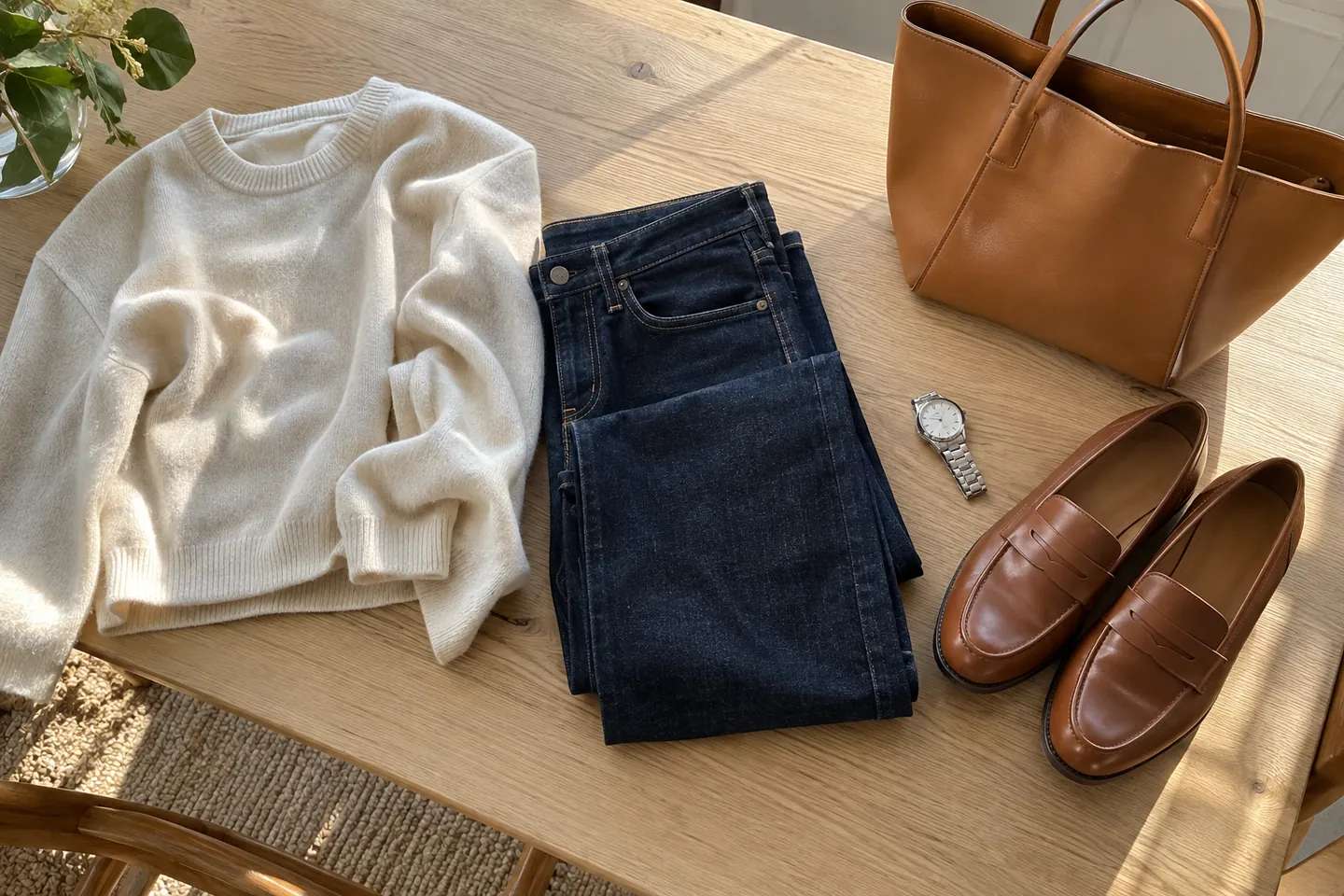
 Capsule: Nine Pieces That Work From Desk to Dinner
Build a daywear capsule of nine pieces that mix into dozens of outfits. Includes a capsule checklist that counts your possible outfits.
 Tops
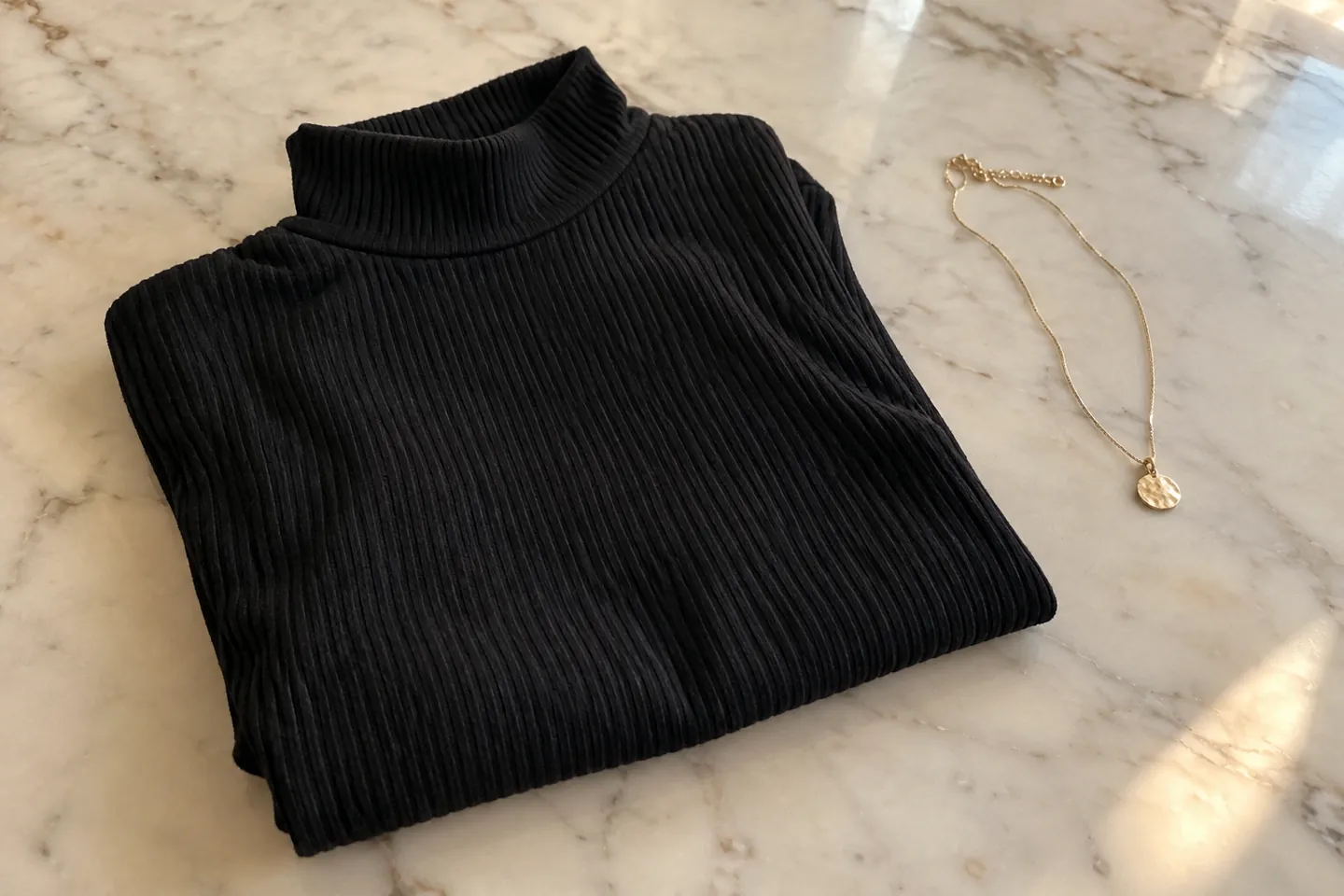
Black Choker Top: Six Ways to Wear It Well
Six ways to wear a black choker top, from office to evening, with a picker that suggests bottoms, layers and jewellery for your occasion.
 Guides
How to Measure Yourself for Dresses and Jumpsuits
Measure bust, waist, hip and length correctly, then use the size calculator to find the size range to start with for dresses and jumpsuits.