Daywear
Daywear Capsule: Nine Pieces That Work From Desk to Dinner
A daywear capsule is a short list of pieces that all work together: two bottoms, three tops, one layer, one dress, and two pairs of shoes. Nine well-chosen pieces give you about 28 outfits and remove most morning decisions.
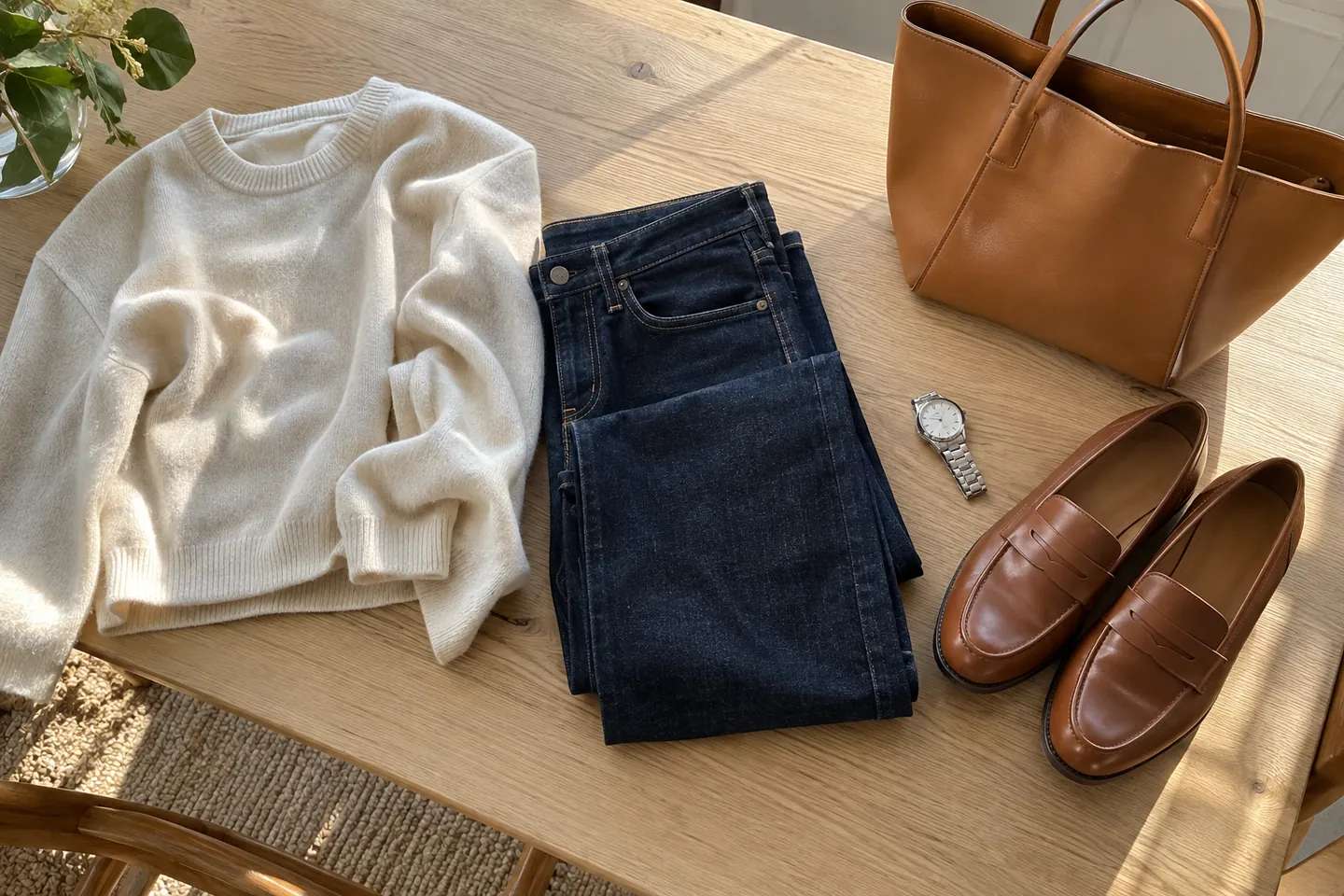
Most people do not need more clothes for the working day. They need fewer pieces that work with each other, so a morning meeting, a lunch and a dinner with friends can all be dressed from the same small set. A daywear capsule is that set: nine pieces, chosen so that every top works with every bottom and every layer works over every top.
Why nine pieces is the right number
A capsule is only useful if it is short enough to hold in your head. Nine pieces is the point where the combinations start to multiply faster than the pieces you add. Two bottoms and three tops already give six pairs. Add a layer that works over all three tops and the number grows again. Add a dress and a second pair of shoes, and the list covers a full working week, plus weekend and evening use.
The aim is not to own only nine things for ever. It is to build the base first, so that every later purchase fits into it. When you add a new piece, ask which existing pieces it works with. If the answer is fewer than three, the piece is probably a single-use item, and it can wait.
The nine pieces, and the job each one does
- Two bottoms. One pair of straight dark jeans or tailored trousers, and one pair in a second neutral such as grey, navy or camel. Choose a cut you will wear in both settings, not one you wear only on weekends.
- Three tops. A fine-knit sweater in a neutral, a crisp white or cream shirt, and a simple blouse or a fitted top in a slightly richer tone. Each should work tucked and untucked.
- One layer. A camel or navy cardigan or a short tailored jacket. It turns a top into a finished look and covers the cooler hours of an office.
- One dress. A knit or jersey dress in a neutral colour, long enough to sit at the knee or below. It works alone for a lunch and with a jacket for a meeting.
- Two pairs of shoes. Loafers or flat leather shoes for daily walking, and one heeled or boot option for dinners and evenings.
In practice this gives a simple formula. Outfits equal bottoms times tops times the number of ways you can add a layer (none or one), times the shoes that fit the setting. With two bottoms, three tops, one layer and two shoes, the count is 2 × 3 × 2 × 2 = 24 combinations, before the dress adds more. The checklist below makes the same count with your own pieces.
Capsule checklist
Tick the pieces you own. The counter estimates how many different outfits they make.
Choose the colours before the shapes
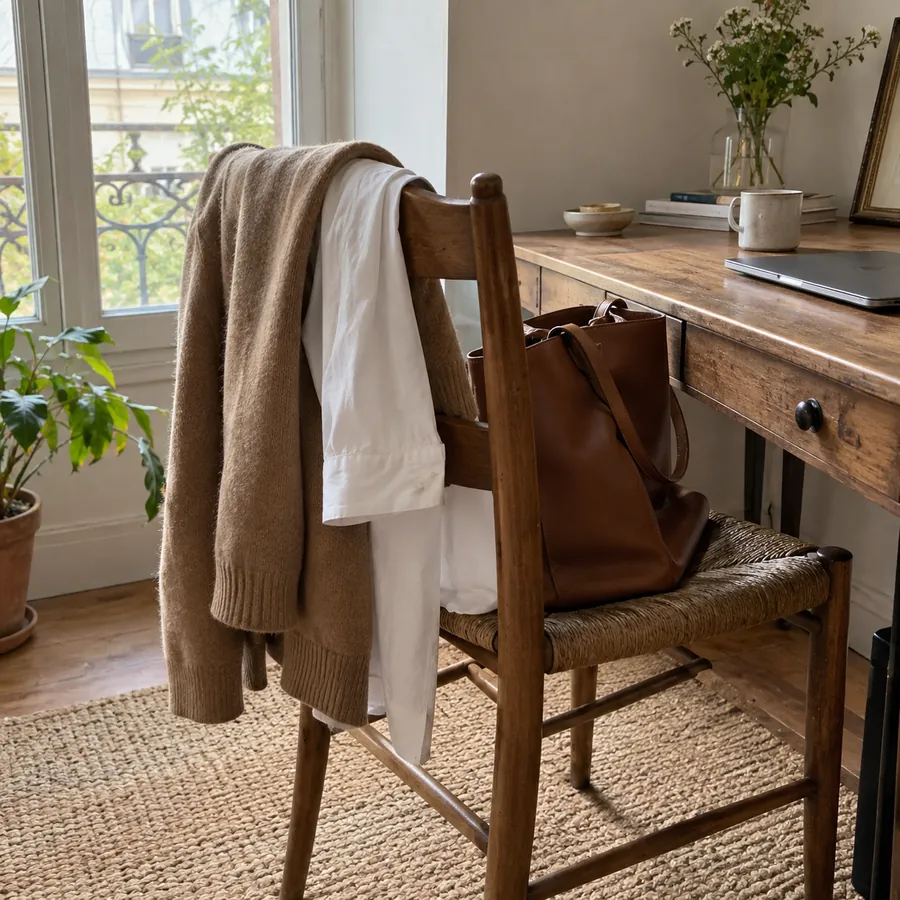
A capsule works when its colours agree. Choose three or four base colours and make everything else fit among them. A common set is cream, navy, camel and a dark neutral such as charcoal or black. Each piece should sit within that palette, and any accent colour should appear only once, in a bag, a scarf or a pair of earrings.
Check colours in daylight, not under shop lights. Two greys can look identical under a lamp and clash at the window. Hold the pieces together, next to each other, before you buy. If a new top does not sit well next to your jeans, it will not work in the morning either.
How fabric and fit decide whether a piece gets worn
Fabric matters more in a capsule than in a rotating wardrobe, because you wear each piece more often. A knit that pills after three washes will be the first thing you stop wearing. Look for fabrics that keep their shape and recover after a day of sitting: cotton twill, a fine merino or wool blend, and a structured jersey for dresses.
| Piece | Look for | Avoid |
|---|---|---|
| Trousers | Mid-weight twill, a stable waistband, a hem that works flat or with a heel | Thin fabric that shows the seat, very low rises |
| Knitwear | Fine gauge, tight rib at cuffs, natural fibres | Loose knits that stretch at the elbows |
| Shirts | Cotton poplin or a light oxford, shoulder seams that sit on the shoulder | Stiff interfacing, a collar that gapes |
| Dresses | Jersey with a little structure, a neckline that suits the top you wear under it | Thin jersey that clings at the hip |
| Shoes | Leather uppers, a sole you can walk in all day | Shoes you must break in for a week |
Fit is the other half. Trousers should sit at your natural waist or just below, and the leg should fall without pooling. A shirt should allow you to lift your arms without the back pulling up. A cardigan should close easily at the front and not pull across the bust. When a piece fits well in these three places, a tailor can fix the rest.
Build the outfits before you buy
Before you add a piece to the capsule, write down three outfits it makes with what you already own. If you can write three, it earns its place. If you cannot, look again at the colour, the fabric and the length. A cropped cardigan, for example, works well with high-waisted trousers and poorly with a dress, so it fails the test unless you wear trousers most days.
Keep a short list of the outfits you actually wear, not the ones you imagine. After two weeks you will see which pieces get worn and which stay on the hanger. That list tells you what to replace, which is usually a shoe or a bottom, not an entire wardrobe.
A simple weekly plan
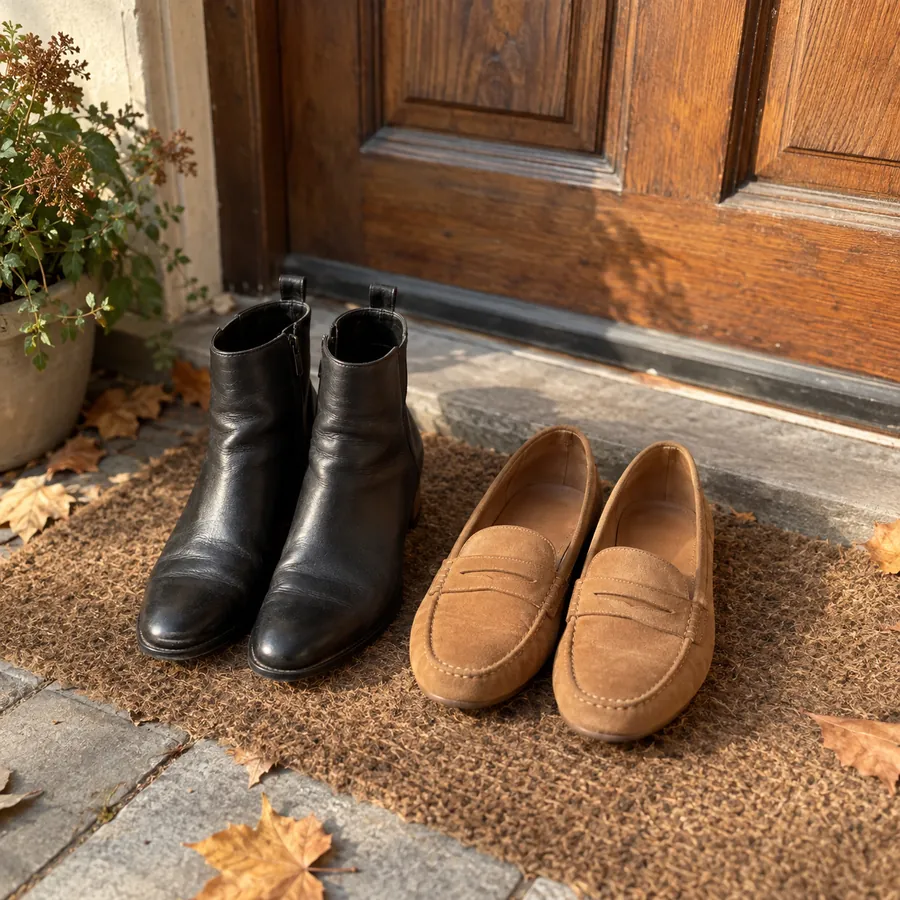
A capsule gives you a rhythm. On Monday, wear a fitted top with your tailored trousers and the cardigan. On Tuesday, wear the dress with loafers and a jacket for a meeting. On Wednesday, the knit sweater and the second neutral trousers. On Thursday, a shirt tucked into the dark jeans with the heeled shoes for dinner. Friday can repeat any of these with the bag you like most.
This plan is not a rule. It shows how quickly the pieces rotate, and how a capsule removes the daily question of what to wear. Most of the time, the right outfit is the one you did not have to think about.
Frequently asked questions
How many outfits can nine pieces make?
With two bottoms, three tops, one layer and two pairs of shoes, the basic count is 24 outfits. The dress adds four more, because it works with the layer and both pairs of shoes, so the full set gives about 28 outfits. The checklist counts the outfits for the pieces you own.
Should a capsule be all black?
No. Black works well, but a capsule that uses cream, navy, camel and one darker neutral is easier to wear in daylight and looks less severe at lunch.
How often should I replace capsule pieces?
Replace a piece when it no longer fits or no longer holds its shape, not when a trend changes. Shoes and knitwear usually need replacing first.
Can a capsule work for a larger or smaller wardrobe?
Yes. The nine-piece set is a starting point. Once it works, add pieces only when they combine with at least three things you already own.
Fabric and care guidance reflects general garment-care advice. Always follow the care label on each piece.
Keep reading
 Jumpsuits
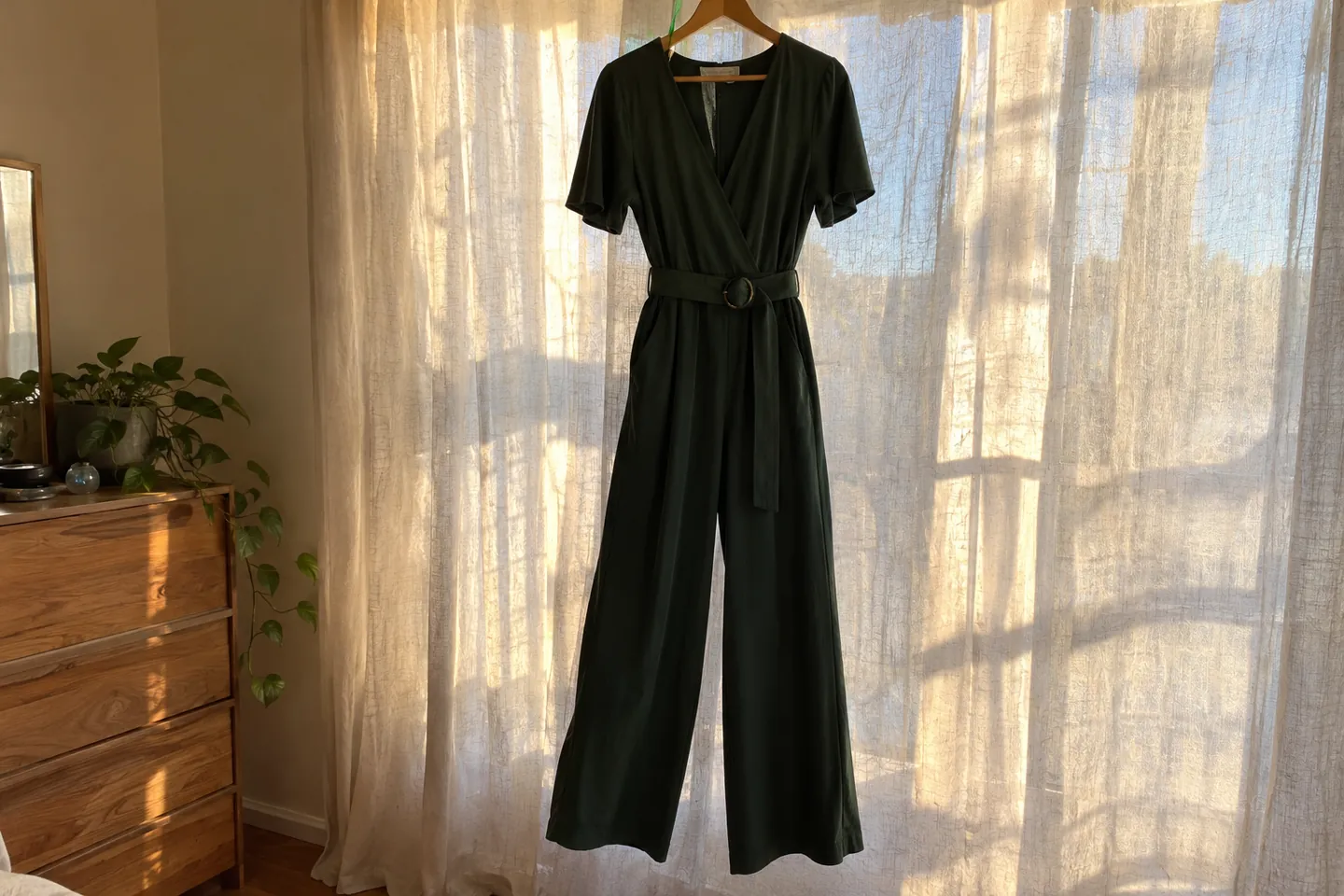
 That Fit: How to Choose Rise, Leg Width and Fabric
How to pick a jumpsuit that fits: rise, leg width, fabric drape and waist. Includes a fit checker that suggests the cut for your proportions.
 Beauty
A Ten-Minute Beauty Routine That Holds Up All Week
A simple ten-minute beauty routine: cleanse, treat, moisturise and protect. Includes a routine builder that totals the time and the steps you need.
 Guides
How to Measure Yourself for Dresses and Jumpsuits
Measure bust, waist, hip and length correctly, then use the size calculator to find the size range to start with for dresses and jumpsuits.