Party
Party Dresses: How to Pick the Right Cut, Length and Fabric
The right party dress depends on three choices: the occasion's formality, the cut that suits your shoulders and waist, and a fabric that holds its shape after hours of wear. Start with the dress code, then narrow the cut, then check the length against your shoes.
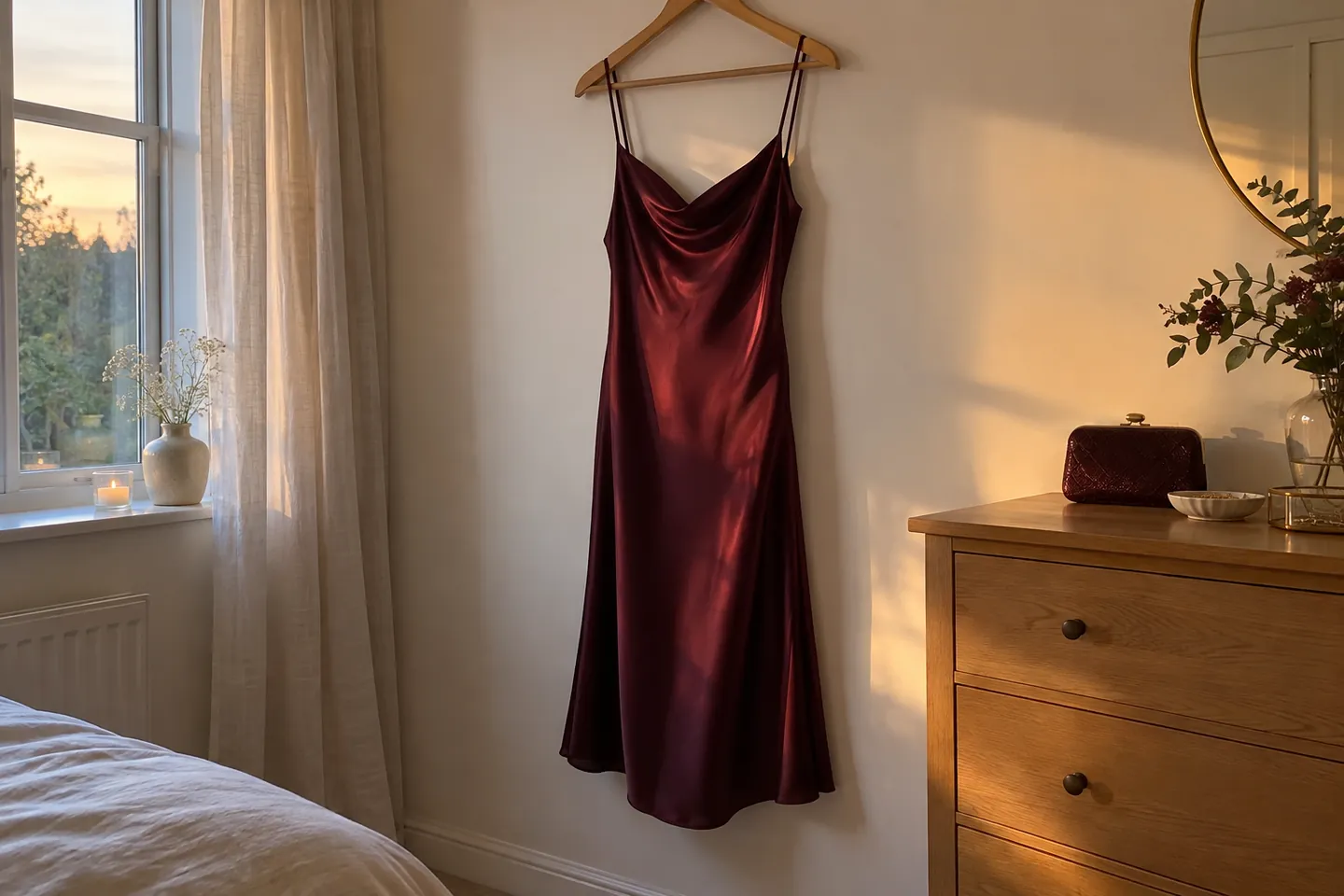
A party dress has to do three jobs at once: match the event, flatter the body, and survive a long night. Most disappointing purchases fail at one of these, usually the first, because the dress is right for a different kind of evening. This guide takes the decisions in the order that saves you the most returns and regrets: the occasion first, then the cut, then the fabric, then the length.
Start with the dress code, not the trend
Party invitations rarely say what they mean. "Cocktail" can mean a sleeveless dress in June and a dressy suit in January. Before you look at a single cut, decide where your event sits on a simple scale: daytime, cocktail, evening, or black tie. Each level sets the minimum formality and gives you a range of lengths that will look right.
A daytime party, such as a garden lunch or a birthday brunch, suits knee or midi lengths in lighter fabrics, cotton blends, crepe or a printed viscose. A cocktail party usually works with a midi or knee length in satin, crepe or a textured jacquard. An evening party, which starts after sunset and often goes past midnight, calls for a midi or floor length with more structure. Black tie is the only setting where a floor-length gown is expected as the default.
If you are unsure which level you are in, look at the venue and the time. A restaurant at 7 pm, a hotel ballroom and a rooftop bar each suggest a different level, even with the same written invitation. When in doubt, go one step more formal than the most casual guest you expect to see, and then remove a layer or accessory on the night.
Pick the cut that balances your shape
Once the dress code is set, the cut decides how the dress sits on you. The same length and fabric can look completely different in a slip, a wrap, a bodice with structure, or a fitted sheath. Think about which area you want to draw attention to and which you want to soften, then choose a cut that does that job.
- Slip dresses skim the body without holding it. They suit most body shapes, but they show every line under the fabric, so they need a good slip or shapewear in a close tone.
- Wrap dresses define the waist and can be adjusted by tying the belt. They are a safe choice for cocktail events and for anyone who wants a fitted look without a tight fit.
- Structured bodices, with boning, darts or a seamed panel, hold the shape of the upper body. They are useful when the fabric is heavy, such as a jacquard, or when you want the dress to stand up on its own in a crowded room.
- A-line skirts widen from the hip and make dancing and walking easier. They are a good match for a fitted or structured top.
- Fitted sheaths are the most formal option at cocktail level. They suit a confident fit and work best in a fabric with a little give.
A simple rule helps: if your shoulders are broad, a V neckline or a structured sleeve balances them. If your waist is the area you like most, a seam or wrap at the natural waist shows it. If you prefer to draw the eye to your legs, a shorter length with a fitted or A-line skirt works.
Party dress finder
Answer three questions. The suggestion updates as you choose.
1. What is the dress code of the event?
2. Which area do you want to highlight?
3. Which fabric do you prefer?
Fabric decides how the dress behaves after four hours
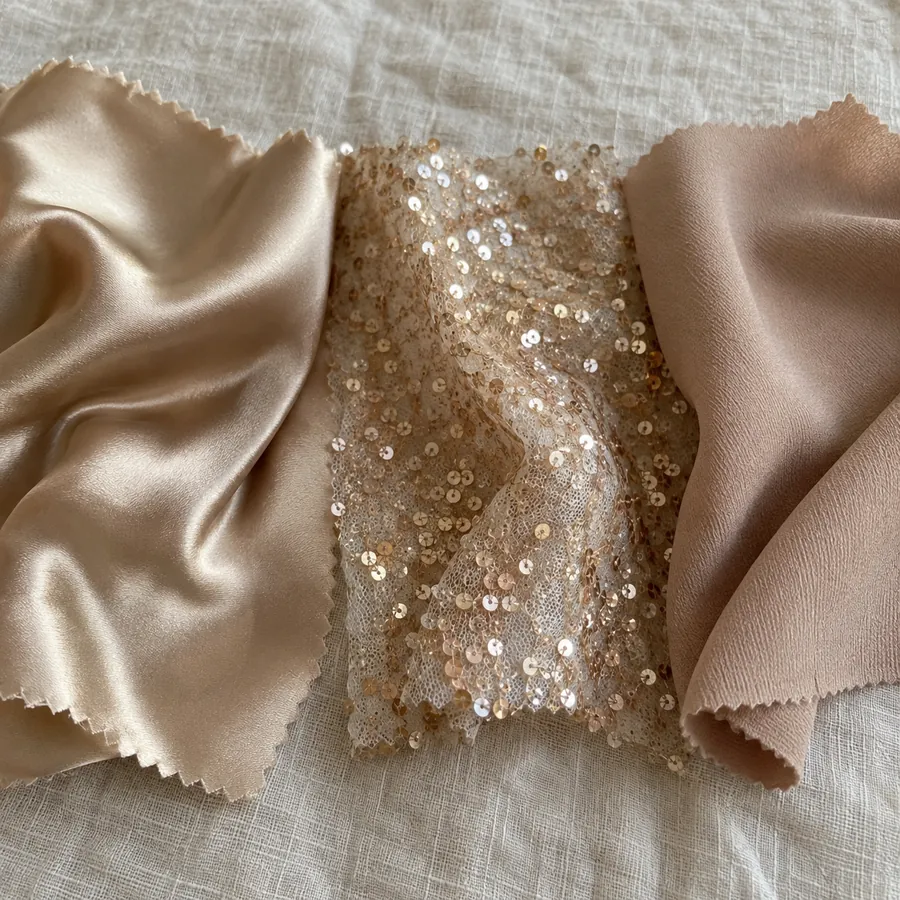
A fabric that looks wonderful on a hanger can fail in the first hour of an event. Look at three things: how the fabric drapes, how much it creases, and what it does when you sit down. Then match those to the length of the event.
| Fabric | Looks best at | Watch out for |
|---|---|---|
| Satin | Cocktail and evening, warm light | Shows creases and body lines; hang straight after wear |
| Crepe | Daytime, cocktail, long events | Heavier than it looks; can be warm in a crowded room |
| Sequin on mesh | Evening and parties after dark | Can scratch skin and snag; check the lining |
| Jacquard | Cocktail and winter events | Stiff at the hip; needs a good fit |
| Viscose | Daytime and summer parties | Creases easily; cling if unlined |
For a long event, choose a crepe or a jacquard over a pure satin. Crepe keeps its shape for hours and hides small movements. Satin looks more formal but shows every crease once you sit down for dinner. If you want satin, look for a version with a lining that stops it clinging to tights or shapewear.
Sequin is the strongest choice for an evening that runs late. Check that the sequins sit on a soft mesh or a lining, not a stiff base, and that the edges are finished so they do not catch on the other guests. A small sequin panel, such as a bodice or a hem, is often enough to look party-ready without the discomfort of a fully sequinned dress.
Length is the detail people get wrong
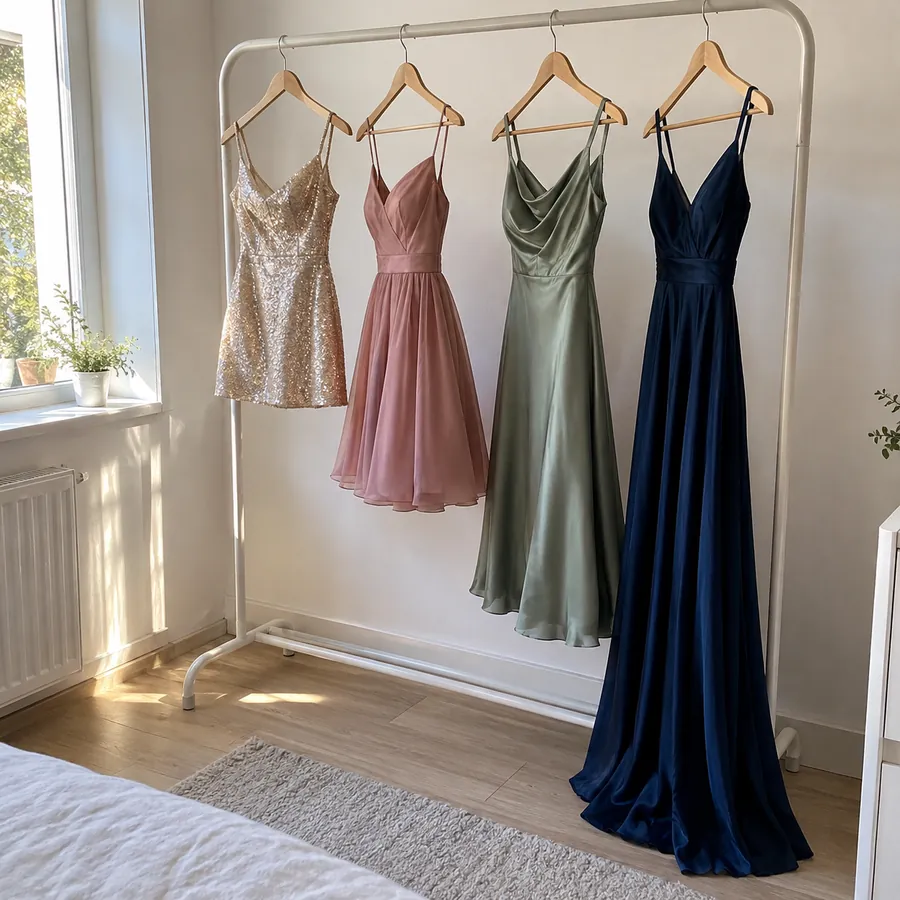
Length changes the whole look of a party dress more than most people expect. A mini says "playful" in a bar and "too casual" at a formal dinner. A midi, which falls between the knee and the calf, is the most flexible length: it suits cocktail events, looks right with heels or flat sandals, and does not need much planning. A floor length sets a formal tone and needs to be tested for the height of your heels.
Before you buy, check the length in the shoes you plan to wear. Stand in front of a mirror with heels on and look at the hem from the side. A hem that is level with your ankle looks deliberate in a long dress, but a hem that touches the floor in one place and not another looks like a mistake. If you are between sizes in length, choose the longer option and have the hem taken up, because letting it down is rarely possible.
Use the midi as your default. Choose a knee length for daytime and warm venues, a midi for cocktail and most evening events, and a floor length for black tie or when the invitation says formal. Wear a short length only when the event is clearly relaxed.
Shoes, bags and the finishing details
The shoes change the dress more than any accessory. Heels between 5 and 8 cm suit most midi lengths, because they raise the hem without changing the line. Strappy sandals work with knee lengths and satin. Block heels are a practical choice for outdoor parties and long walks, and they look good with crepe and jacquard.
Choose a bag that matches the formality of the dress. A structured clutch fits black tie and evening; a small crossbody bag suits daytime and cocktail. Keep the jewellery to one main piece. If the neckline is detailed, such as a cowl or a beaded bodice, earrings alone are enough. If the neckline is plain, a single chain or a statement cuff can finish it.
Finally, check the practical details before you leave: a spare pair of tights in your bag, a safety pin for a loose strap, and a small brush for lint on dark fabrics. These are the details that keep the dress looking as good at midnight as it did at eight.
A checklist before you buy
- Confirm the dress code and the time of day.
- Choose the cut that balances the area you want to show.
- Check the fabric for drape, creasing and comfort when you sit.
- Try the length with the shoes you will wear.
- Check the lining and the seams at the underarm and hip.
- Plan the bag and jewellery so they match the formality, not the other way round.
If the dress passes all six checks, it will work for the event. If it fails one, that is usually enough reason to keep looking, because a single weak point, such as a hem that is too short or a fabric that creases, is what people remember at the end of the night.
Frequently asked questions
What length is safest for a party dress?
A midi, between the knee and the calf, is the most flexible choice. It suits cocktail events, works with heels or flat sandals, and avoids the risk of looking too casual or too formal.
Is satin too formal for a daytime party?
It can be. For daytime, choose a satin with a matte finish, a knee length or a simple cut, or switch to crepe or viscose. Satin works best after the sun goes down.
How do I stop a slip dress from showing lines?
Choose a slip or shapewear in a tone close to your skin, or pick a lined dress. A slightly heavier fabric such as crepe also hides lines better than a thin satin.
What if the invitation says "cocktail attire"?
Choose a midi or knee-length dress in a dressy fabric such as satin, crepe or jacquard, or a tailored dress with a jacket. Avoid denim, casual knitwear and very short minis.
Dress code definitions follow common etiquette references such as the Emily Post Institute (emilypost.com). Fabric care points reflect general garment-care guidance, and the care label on each garment always takes priority.
Keep reading
 Guides
Dress Codes Decoded: Black Tie, Cocktail, Smart Casual and More
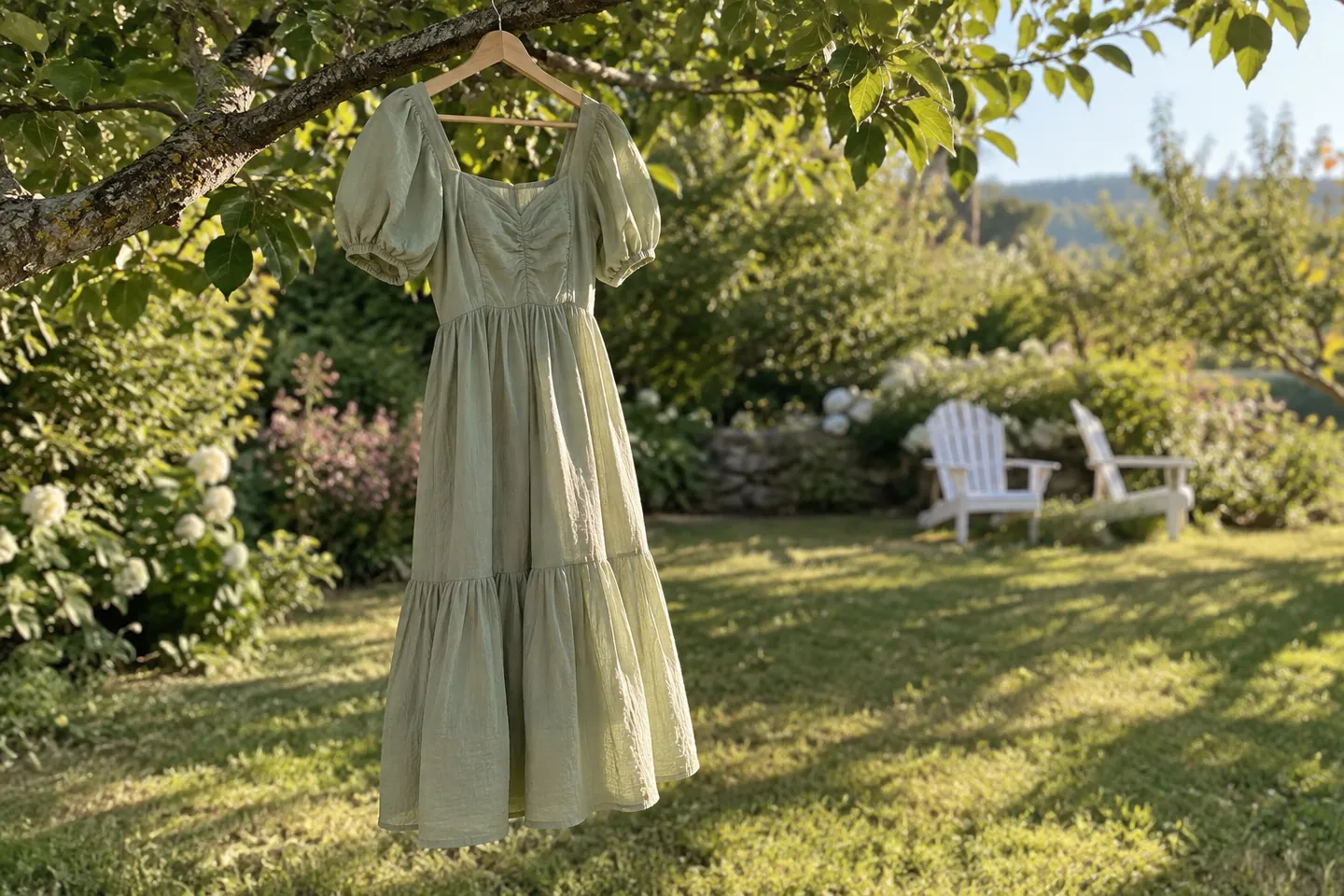
What black tie, cocktail, smart casual, business casual and festive attire really mean, with examples and a flashcard quiz to test yourself.
 Guides
Wedding Guest Outfits for Daytime, Evening and Garden Weddings
What to wear to a wedding as a guest: outfits by time of day, venue and season, with a checker that lists what to confirm before you shop.
 Dresses
Bardot Dresses: Choosing the Neckline, Fit and Occasion
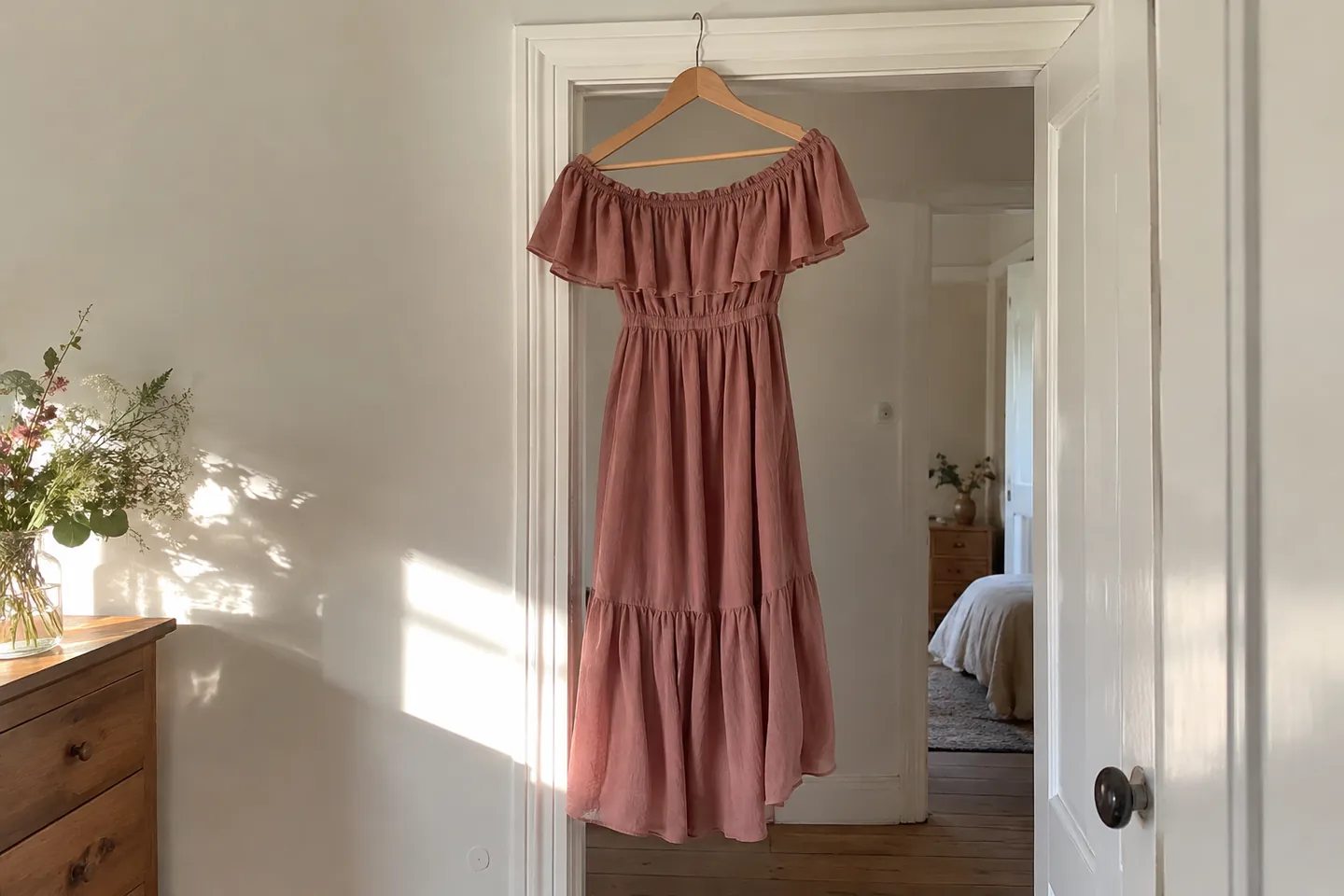
Bardot dresses explained: how the off-shoulder neckline fits, which bodices suit which occasions, and a side-by-side comparison of neckline types.